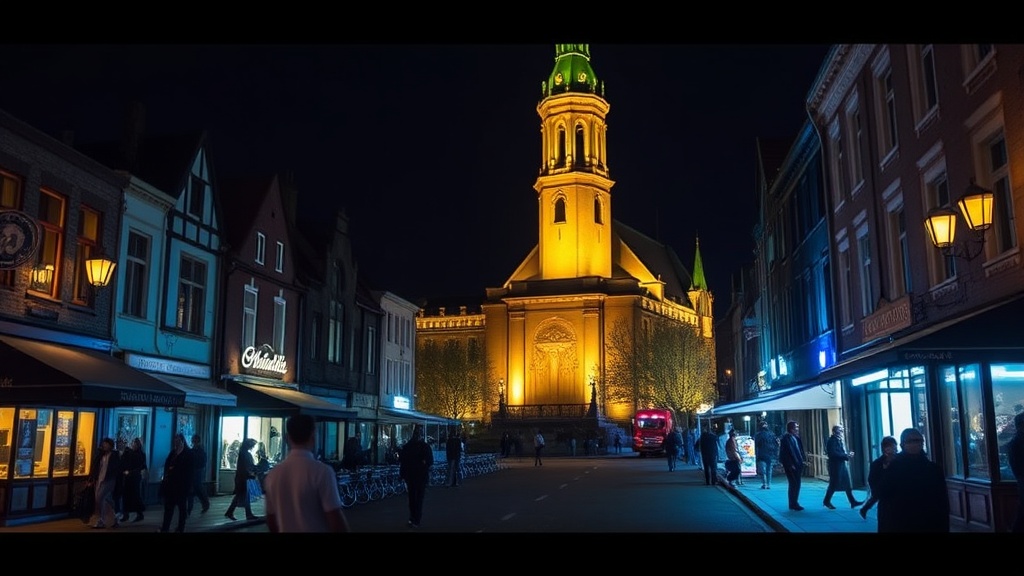
10 Choses à Faire à Saint-Jérôme: Guide Local 2024

Visiter la majestueuse Cathédrale de Saint-Jérôme
Flâner le long de la Rivière du Nord
Explorer le centre-ville et ses boutiques locales
Assister au Festival de la chanson de Saint-Jérôme
Découvrir le marché public et les produits locaux
What Makes Saint-Jérôme Worth Exploring?
Saint-Jérôme offers a rare mix — authentic Quebec charm without Montreal's chaos. This guide covers ten standout experiences: hiking trails with real payoff, local food spots that locals actually frequent, cultural stops that reveal the region's character, and practical tips for getting around. Whether you're planning a day trip from Montreal or mapping a Laurentians weekend, here's what's worth your time.
What's the Best Way to Get to Saint-Jérôme from Montreal?
The Exo commuter train runs directly from Montreal's Central Station to Saint-Jérôme — roughly 75 minutes, no traffic stress. Driving via Autoroute 15 takes about 45 minutes without congestion (rare on weekends). The catch? Parking downtown fills fast on market days.
For drivers, the Exo Saint-Jérôme line schedule matters — last trains leave Montreal around 10 PM on weekdays, earlier on Sundays. Ride-share from Montreal costs $60–80 one-way. Once in Saint-Jérôme, the downtown core walks fine; you'll want wheels for trailheads and ski hills.
10 Experiences That Define Saint-Jérôme
1. Parc Régional de la Rivière-du-Nord — The Hike Locals Do Weekly
Fourteen kilometers of trail thread through old-growth forest along the Rivière-du-Nord. The main loop (8.5 km) hits old hydroelectric ruins, suspension bridges, and picnic spots that don't feel like parking lots. Entry runs $8.50 per adult — season passes exist if you're staying a while.
Weekday mornings deliver solitude. Weekends? Arrive before 9 AM or fight for trailhead parking. The park connects to the larger Parc national du Mont-Tremblant network if you're craving longer routes.
2. Cathédrale de Saint-Jérôme — More Than a Photo Stop
Built 1897–1900, this stone cathedral anchors downtown visually and culturally. The interior features woodwork from Quebec artisans — not imported, not replicas. Free entry; guided tours run Tuesday through Saturday ($5 donation suggested). The stained glass alone justifies twenty minutes.
Mass still happens (check schedules if you're sensitive to disruptions). Photography's permitted without flash. Worth noting: the cathedral sits at the top of a steep climb from the train station — factor that in if mobility's a concern.
3. Marché de Saint-Jérôme — Saturday Mornings Done Right
From May through October, local producers set up at Place des festivités. Think Quebec strawberries in June, corn in August, squash varieties you've never seen. It's compact — maybe 30 vendors — which means quality control stays high. No resellers masquerading as farmers.
Cash still rules here, though most stalls now take cards. Show up hungry: Le Casse-Croûte du Marché does breakfast sandwiches with local cheese that ruin diner chains forever. Winter edition runs monthly indoors — smaller, but the maple products justify the trip.
4. Ski La Réserve — The Under-the-Radar Hill
Mont-Tremblant gets the hype. La Réserve gets the locals — same Laurentian snow, half the lift lines, a third of the ticket price. The terrain splits roughly: 35% beginner, 40% intermediate, 25% advanced. Vertical drop hits 305 meters — respectable for the region.
Night skiing runs Thursday through Saturday until 10 PM. The lodge won't win design awards (built 1970s, renovated 2018), but the poutine at Le Refuge hits properly after cold laps. Season passes early-bird at $299 if you commit before October.
5. Microbrasserie Saint-Pancrace — Craft Beer With Roots
Named after Saint-Jérôme's original parish, this brewery occupies a converted garage near the train tracks. The IPA (La 158, 6.5%) sells out — it references the highway that connects the town to Montreal. The tasting room fits 40 people max; weekends mean standing room.
Food trucks rotate Thursday through Sunday. No kitchen, no pretension. The staff knows their stuff — ask about the experimental sours aging in barrels out back. Growler fills run $18–22 depending on style.
6. Vieux-Saint-Jérôme — The Walkable Core
Quebec's Ministry of Culture designated this neighborhood a heritage site in 2005. The architecture spans 1850s to 1950s — Victorian storefronts beside Art Deco banks, stone houses with wraparound porches. Interpretive plaques actually explain what you're looking at (revolutionary, really).
Rue de la Gare forms the main artery: cafés, independent bookstores, a proper fromagerie (Fromagerie Marie-Kate). Parking's free after 6 PM and all day Sunday. The whole district compresses into about ten walkable blocks — no marathon required.
7. Parc John-H.-Molson — Green Space That Works
This isn't placeholder grass between roads. Seventeen hectares includes a bandstand (summer concerts), outdoor pool (June–August, $4 entry), and paved trails that accommodate strollers and wheelchairs. The riverfront section offers benches positioned for actual sunset viewing.
In winter, the city maintains a skating oval — free, lit until 10 PM, hot chocolate sold nearby. The playground underwent renovation in 2022; it's now the kind that makes adults jealous. Dogs allowed on-leash in most areas.
8. Musée d'art contemporain des Laurentides — Culture Without Crowds
MAC LAU (as locals abbreviate it) focuses on Quebec artists — painters, installation artists, digital work. The permanent collection rotates; temporary exhibitions change every three months. Entry's free (donations appreciated). Wednesday evenings often feature artist talks.
The building itself deserves attention — former courthouse, 1920s limestone, converted in 1994. The gift shop stocks prints from regional artists at prices that don't require art-market budgets. Check their current exhibition schedule before visiting — some installations require time slots.
9. Véloroute des Moulins — Biking With History
This 18-kilometer paved trail follows the Rivière-du-Nord, passing actual 19th-century mill ruins. The surface accommodates road bikes, hybrids, even inline skaters (if you're retro). Rental spots cluster near the downtown trailhead — expect $25–35 for a half-day.
The northern section climbs gradually; southern sections stay flat. Signage marks historical points — hydroelectric stations, textile mill foundations, the old railway bridge. No motorized vehicles permitted. Bring water — fountains exist but spacing's irregular.
10. Cabane à Sucre Bouvrette — Sugar Shack Season
Twenty minutes northeast of downtown, this family operation runs February through April. The traditional meal (omelet, ham, beans, pancakes, tire sur neige) costs $32 per adult — all-you-can-eat, which becomes relevant quickly. The maple syrup? Made on-site, sold year-round.
Reservations mandatory for weekend seatings. The property includes a mini-farm (kids lose their minds over the goats) and a boutique selling maple butter, maple mustard, maple everything. The erablière itself dates to 1945 — five generations deep.
Where Should You Eat? A Quick Comparison
| Spot | Style | Best For | Price Range | Reservations? |
|---|---|---|---|---|
| Le Cochon Dingue | Bistro Québécois | Date night, local game | $$$ | Recommended |
| Casse-Croûte Chez Tipit | Diner classics | Poutine, hot dogs | $ | No |
| Microbrasserie Saint-Pancrace | Craft beer focus | Groups, casual | $$ | No (first-come) |
| L'Oeufrier | Breakfast/brunch | Weekend mornings | $$ | Weekends yes |
| Marché Public vendors | Street food | Quick, seasonal | $ | N/A |
When's the Best Time to Visit Saint-Jérôme?
Fall (mid-September through October) hits the sweet spot — foliage, harvest markets, comfortable hiking weather. That said, winter delivers if you ski; summer works for river activities. Spring's mud season in the Laurentians — trails close, bugs emerge, patience required.
Event-wise, the Festival de musique émergente (September) books Quebec indie acts across downtown venues. The Christmas market (late November) transforms the cathedral square with local crafts and mulled wine. July's National Holiday celebrations (June 24) bring the biggest crowds — book accommodation early.
Practical Tips for First-Timers
French dominates — you'll navigate fine in English, but greetings and basic phrases help. The train station has no luggage storage; lockers exist at the tourist office (Place de la Gare, open daily 9–5). Cell service works everywhere except deep in Parc Régional (download offline maps).
Accommodation clusters along Boulevard Saint-Antoine (chain hotels) and in heritage B&Bs downtown. The latter costs more but positions you for walking everything. Here's the thing about Saint-Jérôme: it's not trying to be Montreal-lite or Tremblant-cute. It functions as a real town where people live, work, and recreate — which means authentic experiences alongside occasional closed-on-Monday frustrations. Bring cash for smaller vendors. Check hours before trekking to specific shops. The payoff? A Laurentian experience that hasn't been focus-grouped for tourists.